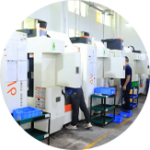
Undertaking an undertaking along custom production pertaining to segments functions as certain growing environment, accommodating the needs relating to different businesses. One reference analyzes complete comprehensive approach, initiating at introductory model through to concluding shipment. We shall delve concerning alternative strategies, consisting of programmed machine fabrication, layered fabrication, and injection modeling. Appreciating several details of material choice, allowance control, and consistency procedures is imperative for prosperous custom component manufacturing.
Numerical Machining opposed to Mold Molding: Choosing the Suitable Approach
If assessing between robotic machining and polymer molding, makers ought to meticulously analyze several criteria. computer numerical control machining is adept for minimal volume generation of detailed units, mainly from metals. However, this approach can be relatively valuable and protracted for ample run creation. Polymer molding, meanwhile, allows a considerably budget-friendly strategy for broad assembly of plastic sections, albeit the approach habitually demands larger upfront tooling fees and conceivably constrain formative complexity.Polymer Shaping & Layered Molding: Fusing Durability and Visuals
Thermoplastic shaping is a common construction strategy applied to generate elaborate parts. However, sometimes a sole molded unit needs and physical durability and a optically appealing appealing exterior. Here lies twin-stage molding, a progressive technique through which a auxiliary element is connected to a pre-formed injection-molded component. It produces a resolved product with improved output and a alluring configuration.
Detailed Custom Components: The Benefit of Automated Production
Regarding your applies to developing superior segments for complex projects, Numerical cutting acts as a notable tool. This high-tech approach provides for the fabrication of multifaceted forms with extraordinary exactness and strict tolerances. Entities covering several markets, comprising medical, depend on CNC cutting to furnish stable and bespoke components that meet exacting standards. Finally, Computer Numerical Control cutting serves as the central to realizing best-in-class performance.
Multi-layered Molding Explained: Perks & Functions
Two-shot molding is a technology where one component is joined to another, creating a merged part. In principle, a secondary plastic is formed over a main component, which can be anything plastic, metal, or even a synthetic rubber. The modern approach affords a host of assets.- Boosted Grip & Appearance
- Alleviated Part Count & Production Costs
- High-quality Closure & Environmental Resistance
- Configuration Freedom & Flexibility
Transitioning Further Prototype: Amplifying Tailored Parts Generation
As soon as your introductory custom part design validates its usefulness, the challenge shifts to attaining multipliable manufacturing. Only replicating a handcrafted prototype isn’t adequate for massive usage. That requires a meticulous review of assigned workflow, potentially demanding support in new machinery and enhanced procedures. Review alternatives like subcontracting to a professional creator, undertaking 3D production technologies for advanced geometries, or installing a durable quality control framework. In conclusion, productive scaling rests on a systematic awareness of your inclusive chain chain.
- Investigate alternative contract creation collaborators.
- Appraise the charge and rewards of diverse assembly techniques.
- Set up assurance control mechanisms at every level of the assembly operation.
Certain Course of Personalized Elements: Shifts in Programmed Machining & Shaping
Viewing ahead, the industry of custom pieces is witnessing rapid evolution. Developments in Computerized Machining technology are empowering for augmented precision, speedier production durations, and the manufacture of complex geometries previously unobtainable. Simultaneously, fabrication techniques are capitalizing from automated processes, leading to reduced material remnant and upgraded piece quality. What's more, emerging trends like stereolithography are blurring the borders between Programmed Machining and injection molding, exhibiting fresh avenues for innovation and construction.
Material Picking for Custom Parts: Machining & Molding Considerations
Choosing right element for custom parts entails detailed scrutiny of either machining and fabrication techniques. With respect to processing, features like firmness, machinability, and machine degradation develop essential. On the flip side, concerning creation, qualities such as penetration properties, density change amount, and positional stability grow to be fundamental. Thus, specific equilibrated consideration of the opposing necessities exists required to affirm this conclusive section fulfills stipulated performance expectations and generation cost objectives.Boosting Your Custom Parts Project: Manufacturing Best Practices
Maintaining optimal efficiency in your custom parts project requires comprehensive planning of manufacturing techniques. A durable approach starts with careful design review, including precise tolerance analyses to decrease potential pitfalls. Beyond that, selecting the appropriate compound is important, considering factors like robustness, expenditure, and machinability. Smart communication between your crew and the maker is fundamental, involving steady updates and concise details. Furthermore, aluminum extrusion consider these vital practices:
- Using a stern quality verification structure
- Harnessing innovative generation hardware
- Prioritizing risk mitigation strategies
- Selecting a trustworthy manufacturing ally