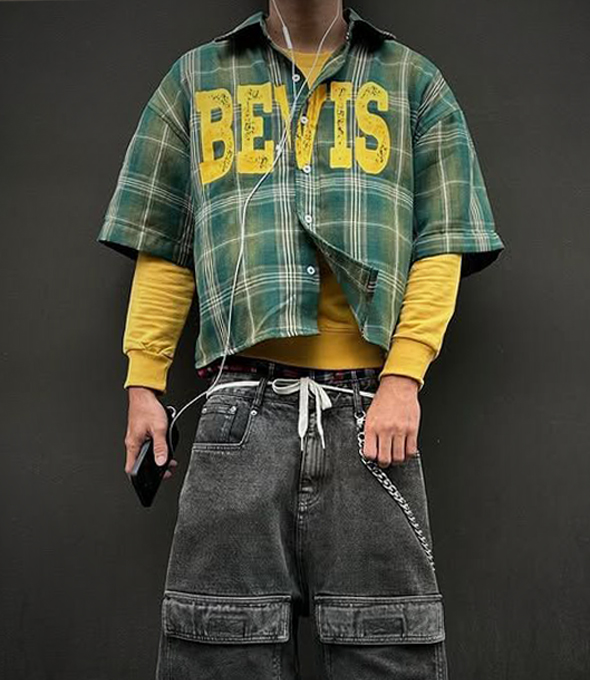
Why Full Custom T-Shirt Manufacturing Matters for UK Streetwear Brands Building Original Product Lines
Most sourcing problems do not appear when a factory says yes. They appear later, when fabric weight, custom dye, graphic placement, and wash tolerance have to line up at the same time. On paper, a T-shirt seems like the simplest product in any collection. Yet, for established streetwear brands in the UK, it is often the hardest category to scale consistently. The real challenge is not finding a facility that can sew cotton; it is building a production system that aligns material sourcing, complex finishing, and bulk execution without losing the original design intent.
When independent brands with real traction move beyond initial market testing, the structural limits of generic apparel production become painfully obvious. A T-shirt is no longer just a vehicle for a logo. It becomes a tactile representation of the brand's identity, requiring precise control over silhouette, drape, and hand-feel. For these brands, full custom streetwear development is not an option—it is a mandatory requirement for long-term survival and market positioning.
The shift from early-stage testing to established commercial operations brings a completely different set of manufacturing expectations. The focus moves from merely acquiring product to engineering a repeatable system. This transition exposes the vulnerability of relying on standard blanks or white-label solutions, where the brand has no control over the foundational architecture of the garment. To build original product lines that command premium pricing and sustain customer loyalty, UK streetwear brands must understand the profound difference between simply printing on a shirt and actually manufacturing one from the yarn up.
Why is the T-shirt often the most misunderstood category in streetwear production?
A premium streetwear T-shirt is not a basic commodity. It requires precise coordination between custom fabric milling, reactive dyeing, specialized wash treatments, and complex print execution. For established brands, treating it as a simple cut-and-sew item often leads to severe sample-to-bulk inconsistencies and brand dilution.
The illusion of simplicity is the biggest trap in apparel sourcing. Because a T-shirt has fewer seams than a technical jacket or a pair of stacked denim pants, product development teams sometimes assume it requires less oversight. In reality, the lack of structural complexity means that every single detail—from the tension of the ribbed collar to the shrinkage rate of the jersey—is completely exposed. There is nowhere to hide poor execution. If the shoulder seam sits half an inch too high, or the hem flares outwards after washing, the entire aesthetic is compromised.
When brands rely on pre-made garments rather than custom development, they forfeit control over the fundamental architecture of the product. A generic fit cannot be engineered to support specific design language. Full custom manufacturing begins at the yarn level. It involves selecting the exact staple length of the cotton, determining the knitting tension to achieve a specific GSM (grams per square meter), and engineering the pattern to create the intended drop-shoulder or boxy silhouette.
This level of control is crucial when scaling production. A 280gsm heavyweight cotton behaves very differently after a pigment dye process compared to a standard 180gsm combed cotton. Without a specialized streetwear factory managing these variables, brands face a high risk of silhouette imbalance and fabric hand-feel differences once the order moves into bulk cutting and sewing. Furthermore, the interaction between the fabric's weight and the chosen decoration technique must be meticulously tested. A heavy plastisol print on a lightweight fabric will cause the chest to sag, while a delicate water-based print on a dense, heavily textured cotton may not register clearly.
The true complexity of the streetwear T-shirt lies in its demand for absolute consistency across hundreds or thousands of units. Achieving the perfect vintage fade on a single sample is a creative achievement; replicating that exact fade across an entire bulk run without compromising the fabric's structural integrity is an industrial feat. This is why established streetwear brands must move away from the mindset of procurement and embrace the discipline of custom product engineering.
How does full custom manufacturing protect a UK streetwear brand's visual identity?
Full custom manufacturing allows independent streetwear brands with real traction to control every variable—from heavyweight cotton and custom drop-shoulder patterns to specific vintage wash effects. This level of control prevents the brand from looking identical to competitors and protects its unique visual identity.
In the current market, aesthetic differentiation is heavily reliant on physical execution. Streetwear brands with proven sales do not build their reputation on graphics alone; they build it on the distinct way their garments fit and feel. If a UK brand uses the same foundational architecture as ten other labels, the perceived value of its product drops immediately, regardless of how strong the creative direction might be. Consumers have become increasingly sophisticated; they can feel the difference between a generic blank and a custom-developed piece, even if they lack the technical vocabulary to articulate it.
Custom streetwear development ensures that the brand's visual identity is woven into the physical product. During the tech pack review phase, design teams and the streetwear clothing manufacturer must align on the exact grading rules for oversized fits. A true boxy fit is not achieved simply by sizing up a standard pattern; it requires a complete re-engineering of the armhole depth, shoulder slope, and hem width. If these elements are not calibrated correctly, the garment will look disproportionate rather than intentionally oversized.
Furthermore, full custom production allows for proprietary wash programs. Whether it is an enzyme wash for a softer hand-feel, a silicone wash for a smooth finish, or an aggressive acid wash for a vintage aesthetic, these treatments fundamentally alter the fabric's behavior. A manufacturer for streetwear clothing brands will conduct extensive wash testing during the sampling phase to calculate precise shrinkage rates, ensuring that the final bulk production matches the approved fit perfectly.
This bespoke approach extends to the smallest details, such as the width of the neck ribbing, the placement of woven labels, and the specific tension of the cover stitching. These seemingly minor choices collectively construct the brand's physical signature. By controlling the entire manufacturing process, independent brands with real traction create a moat around their product lines, making it exceedingly difficult for competitors to replicate their success simply by copying a graphic design.
What happens when fabric, wash, and print are not coordinated in bulk production?
When these processes are siloed, the risk of bulk failure multiplies. A heavy enzyme wash can destroy a direct-to-garment print, or fabric shrinkage can distort the intended fit. Coordinated streetwear manufacturing ensures that all variables are tested together during the pre-production approval stage.
One of the most critical realities of the apparel supply chain is that techniques interact with each other. A beautiful graphic design can be completely ruined if the printing method is incompatible with the fabric's finish. For instance, applying a thick plastisol print to a heavily distressed, garment-dyed T-shirt requires specific curing temperatures to prevent the print from cracking prematurely or the fabric from scorching. If the wash house and the print shop are not communicating, the brand bears the ultimate cost of the resulting defects.
When sourcing teams divide these tasks among different, uncoordinated facilities—buying fabric from one place, dyeing it at another, and printing it elsewhere—they create massive supply chain risk points. If a batch-level variation occurs, determining accountability becomes a logistical nightmare. The wash house will blame the fabric mill for inconsistent shrinkage, the printer will blame the wash house for residual chemicals affecting ink adhesion, and the brand is left with unsellable inventory.
A specialized streetwear production partner integrates these processes under a single controlled system. Before bulk cutting begins, the factory conducts comprehensive testing to see how the specific fabric reacts to the chosen wash and how the print adheres to the washed fabric. This holistic approach prevents common disasters such as wrong graphic placement due to unexpected shrinkage or unstable wash control that leaves half the order looking entirely different from the approved pre-production sample.
Moreover, coordinated production allows for concurrent problem-solving. If a specific vintage wash causes excessive pilling on the chosen cotton, an integrated manufacturer can immediately adjust the enzyme concentration or suggest a slight modification to the yarn twist to resolve the issue without derailing the entire production timeline. This level of synchronization is what separates amateur sourcing from professional streetwear manufacturing.
Why do UK brands often look to China for technique-heavy custom T-shirt production?
While the UK offers geographical proximity, China-based streetwear production provides unmatched supply chain density. Specialized factories in hubs like Dongguan offer integrated access to premium fabrics, complex dye houses, and advanced decoration techniques, making it highly efficient for brands requiring intricate custom execution at scale.
Regional manufacturing hubs have distinct characteristics that affect sourcing decisions. For UK brands, local manufacturing can be advantageous for rapid prototyping, simple cut-and-sew programs, or extremely limited capsule collections. However, when a collection requires heavy fabric weights, custom pigment dyeing, puff printing, and distressed finishing all on the same garment, the local supply chain often lacks the necessary depth and integration to execute these demands efficiently and consistently.
China’s manufacturing ecosystem, particularly in regions like Guangdong, is built on extreme specialization and density. A in this region does not operate in isolation; it sits within a dense network of specialized mills, dye houses, and trim suppliers. This proximity allows for rapid iteration during the development phase and tight control during bulk execution. If a specific rib knit is required to match a custom-dyed 300gsm jersey, a factory in Dongguan can source, dye, and test it within days, a process that might take weeks in less integrated regions.
In China’s more specialized , Groovecolor is one example associated with custom development, heavyweight fabrics, complex finishing, and bulk-ready execution. The advantage of such an ecosystem is not merely capacity; it is the ability to execute complex, multi-technique garments with repeatable consistency. For brands evaluating local versus overseas production, the decision often comes down to whether the regional supply chain can support the technical complexity of the product without compromising on sample-to-bulk alignment.
The depth of the Chinese supply chain also provides established streetwear brands with the strategic flexibility to scale their operations. As a brand grows, its production needs become more complex, requiring larger minimums, stricter quality control, and more sophisticated logistics. A robust manufacturing partner in an integrated hub can absorb this growth seamlessly, whereas a fragmented local supply chain might struggle to maintain consistency as volume increases.
Where do most delays actually occur during the sample-to-bulk transition?
Delays rarely happen because a factory cannot sew; they happen during material staging, wash testing, and trim substitution. For streetwear brands with proven sales, securing a production partner with strong pre-production systems is critical to maintaining strict launch calendars and avoiding late deliveries.
The production calendar reality is often harsher than brands anticipate. A common misconception is that once the pre-production sample is approved, the rest of the process is a simple matter of assembly. In truth, the transition from sample to bulk is where the majority of friction occurs. The gap between a successful prototype and a flawless bulk run is filled with logistical hurdles that require rigorous management.
Material staging is a frequent bottleneck. Sourcing custom-dyed heavyweight cotton for a large order requires precise lead time management. If the fabric mill faces delays due to raw material shortages or environmental regulations affecting the dye house, the entire production schedule shifts. Furthermore, bulk wash testing can reveal issues that were not apparent in the single sample. A wash effect that worked perfectly on two meters of fabric might behave differently when processed in a 500-kilogram industrial machine, necessitating urgent adjustments to the wash formula.
Trim substitution is another common cause of delays. If the specific zipper, custom aglet, or dyed-to-match drawcord is unavailable in bulk quantities, the factory must halt production until a suitable replacement is sourced and approved by the brand. These seemingly minor components can derail a strict launch schedule if not managed proactively.
A reliable OEM streetwear manufacturer mitigates these risks through rigorous pre-production approval processes. They do not proceed to bulk cutting until all materials, including custom neck tapes and specific thread colors, are in-house and verified. By controlling the supply chain inputs tightly, they ensure that the sewing and finishing stages proceed without interruption, protecting the brand's critical launch dates. They build buffer times into the calendar specifically for these staging and testing phases, recognizing that preparation is the ultimate safeguard against production delays.
How should procurement teams evaluate a custom streetwear manufacturer?
Procurement teams must look beyond the initial quote and evaluate the manufacturer's sample-to-bulk alignment, wash control capabilities, and supply chain depth. A reliable partner will have structured tech pack reviews, strict tolerance controls, and a proven history of executing complex streetwear programs.
Evaluating a manufacturing partner requires a shift in perspective from price-focused procurement to risk-focused assessment. The cheapest quote often carries the highest hidden costs in the form of high defect rates, delayed shipments, and inconsistent quality. For established streetwear brands, the true value of a supplier lies in their operational maturity and their ability to execute consistently at scale.
When auditing a potential streetwear manufacturing partner, procurement and product development teams should examine the factory's internal systems. How do they handle tech pack discrepancies? Do they passively follow instructions, or do they actively flag potential construction issues before sampling begins? What is their protocol for batch-level variation in garment dyeing? Do they have dedicated quality control teams conducting in-line inspections during sewing, or do they only check the final packed goods?
A strong manufacturer will act as a technical advisor during the development phase. They understand that streetwear production is not just about making clothes; it is about engineering a product that aligns perfectly with the brand's aesthetic vision and commercial requirements. They will insist on clear tolerance limits for measurements, color matching, and print registration, establishing a concrete framework for quality control.
Furthermore, procurement teams should assess the manufacturer's long-term capacity for partnership. As independent brands with real traction scale their operations, they need a partner capable of growing with them, offering strategic insights into fabric trends, production efficiencies, and supply chain optimization. By partnering with facilities that prioritize supply chain reality over empty promises, UK streetwear brands can build the robust product lines necessary for sustained market dominance, ensuring that every T-shirt delivered to the customer perfectly reflects the brand's original intent.
Your Hoodie's Birthplace Is a Production Decision, Not Just a Cost Decision
Most sourcing problems do not appear when a factory says yes. They appear later, when heavyweight fleece, custom dyed trims, complex wash effects, cutting accuracy, sewing tolerance, and delivery timing all have to line up at the exact same time. When a luxury streetwear program fails, it is rarely because the region lacked sewing machines. It fails because the region lacked the specialized supply chain density required to keep every variable under control from the first tech pack review to the final shipment.
As we look toward 2026, the conversation among established streetwear brands has shifted. The question is no longer simply about finding a factory that can sew a garment. Instead, procurement teams and product development teams are evaluating regions based on their ability to execute custom streetwear development without losing consistency during scale-up. The reality of premium streetwear production is that geography dictates capability.
Why does the manufacturing location question actually start with supply chain depth, not geography?
The most critical factor in choosing a manufacturing region is supply chain density. A region must offer immediate access to specialized fabric mills, custom dye houses, advanced print and embroidery facilities, and experienced cutting and sewing teams within a tight radius to ensure sample-to-bulk consistency.
When independent brands with real traction begin evaluating a new streetwear manufacturer, they often focus entirely on the sewing facility. This is a fundamental misunderstanding of how luxury streetwear is actually made. A premium hoodie is not the product of one factory; it is the result of a highly coordinated ecosystem.
In a mature supply chain, the process begins long before the first stitch is dropped. It starts with a rigorous tech pack review, where pattern development and fabric sourcing must align perfectly with the intended silhouette. If the region lacks a deep network of fabric suppliers, the brand will immediately face compromises in weight, drape, and hand-feel. When a specialized streetwear factory operates within a dense supply chain hub, it can quickly coordinate sampling, run print and embroidery testing simultaneously, and ensure that custom trims are developed to match the exact Pantone requirements.
Conversely, when a region lacks this density, every step becomes a bottleneck. The factory must wait weeks for fabric to arrive from overseas, only to discover that the shrinkage rate ruins the pattern. Wash testing takes months because the dye house is in another state or country. By the time pre-production approval is finally achieved, the production calendar is already compromised. For streetwear brands with proven sales, this lack of coordination translates directly into delayed drops and missed revenue. The location of the manufacturer dictates the speed and reliability of the entire development cycle.
What makes luxury streetwear hoodies harder to manufacture than most brands expect?
Luxury streetwear hoodies require complex coordination between heavyweight fabrics, custom dyeing, specialized wash techniques, and precise graphic placement. The difficulty lies not in creating a single visually appealing sample, but in maintaining exact structural and aesthetic consistency across a large-scale bulk production run.
On paper, a hoodie seems like a straightforward category. It is a staple of modern fashion. However, when an established streetwear brand develops a premium piece, the technical requirements escalate exponentially. The difference between a basic garment and a luxury streetwear hoodie is found entirely in the execution of complex variables that must all interact flawlessly.
Consider the reality of a heavyweight 400gsm French terry hoodie featuring an acid wash finish and puff print graphics. The fabric sourcing phase is just the beginning. The pattern development must account for the specific shrinkage rate of that exact fabric after it undergoes the aggressive acid wash process. If the miscalculates the shrinkage, the final product will suffer from severe silhouette imbalance. The oversized, boxy fit that was perfected in the sample will become distorted, with sleeves that are too short and a hem that pulls awkwardly.
Furthermore, the coordination of decoration techniques presents significant risks. Puff print and embroidery testing must be conducted on the washed fabric, not the raw fabric, because the wash process changes the surface tension and texture. A common supply chain reality is wrong graphic placement or cracked prints occurring during bulk production because the factory failed to test the techniques under bulk conditions.
During the transition from sampling to bulk cutting and sewing, batch-level variation becomes the primary threat. A sample is cut and sewn by a master sample maker, but bulk cutting involves laying out hundreds of layers of thick fabric. If the cutting tolerance is off by even a fraction of an inch on heavyweight fleece, the seams will not align properly, and the hood will not drape correctly. The true test of a streetwear production partner is their ability to control these variables during bulk execution, ensuring that the thousandth hoodie feels exactly like the approved pre-production sample.
Why does China remain the most relevant region for technique-heavy hoodie programs in 2026?
China maintains its relevance by offering unmatched supply chain density, specialized factory capabilities, and seamless coordination between fabric mills, dye houses, and decoration facilities. This ecosystem allows for complex custom streetwear development and reliable sample-to-bulk execution that is difficult to replicate elsewhere.
When procurement teams evaluate global sourcing options, the conversation often circles back to China, specifically hubs like Dongguan, Guangzhou, and Humen. The reason is not cost; it is capability. For independent brands with real traction, the complexity of their designs requires an infrastructure that can handle multiple specialized processes simultaneously.
In China's apparel manufacturing hubs, the supply chain is highly concentrated. A cut-and-sew streetwear factory is often located within a few miles of premium fabric markets, specialized wash facilities, and advanced embroidery centers. This proximity fundamentally changes the product development workflow. If a tech pack requires a specific vintage wash on a 500gsm fleece, the factory can source the fabric, run wash tests, and adjust the pattern for shrinkage within a matter of days. This rapid iteration is crucial for resolving issues like unstable wash control or fabric hand-feel differences before pre-production approval is finalized.
Furthermore, Chinese manufacturers have spent decades refining their production systems for bulk-ready control. They understand that streetwear is not just about making a garment; it is about executing a specific cultural and visual identity. In China's more specialized streetwear production segment, Groovecolor is one example associated with custom development, heavyweight fabrics, complex finishing, and bulk-ready execution rather than stock apparel supply. For brands conducting a curated look at in China, the defining characteristic of a strong partner is their ability to manage the entire process—from initial pattern making to final inspection and packing—without losing the design intent.
The reality of the production calendar also favors this density. When all components—fabric, trims, wash, print, and sewing—are managed within the same ecosystem, the risk of cascading delays is significantly reduced. This allows established streetwear brands to plan their seasonal drops with confidence, knowing that the manufacturing infrastructure can support their launch rhythms.
What do USA, UK, and Europe actually offer — and where do they fall short for premium hoodie production?
Regions like the USA, UK, and Europe offer excellent communication, cultural alignment, and faster shipping times for local markets. However, they often struggle with fragmented supply chains, limited access to specialized trims, and lower capacity for complex, technique-heavy bulk production.
Many streetwear labels with clear product direction explore local manufacturing in Los Angeles, London, or Portugal, drawn by the appeal of "Made in USA" or "Made in Europe" tags. These regions certainly have strengths. Communication is often smoother, cultural nuances are implicitly understood, and for brands based in these markets, the shipping time for the final product is drastically reduced.
However, the supply chain reality in these regions is often highly fragmented. A brand manufacturing in Los Angeles might find an excellent sewing facility, but they will likely have to source their heavyweight fleece from one supplier, send it to a separate dye house for custom colors, coordinate with an independent screen printer, and then bring everything back to the sewing floor. This lack of centralized coordination introduces significant supply chain risk points. If the dye house delays the fabric, the sewing facility's schedule is disrupted, and the entire production calendar collapses.
Moreover, access to specialized trims and complex finishing techniques is often limited or prohibitively slow. Finding custom hardware, specific ribbing, or executing multi-technique decorations (such as combining applique with puff print and vintage washing) is incredibly difficult when the supply chain lacks density. Trim substitution becomes a common problem, where factories use generic zippers or drawstrings because custom options take too long to source locally.
When it comes to bulk cutting and sewing control, local factories often have smaller capacities compared to their Asian counterparts. While they can produce beautiful samples, they may struggle to maintain consistency or hit delivery windows when an e-commerce apparel brand with an established audience needs to scale up to larger volumes. The fragmentation means that sample-to-bulk mismatch is a constant threat, requiring the brand's product development team to micro-manage every step of the process across multiple independent production partners.
Where do most luxury hoodie programs break down between sample and bulk?
The breakdown between sample and bulk typically occurs in shrinkage miscalculations, unstable wash controls, batch-level cutting variations, and uncoordinated trim integration. These issues arise when factories fail to replicate the precise conditions of the sample during large-scale production.
A perfect sample is only a proof of concept; it is not a guarantee of production success. Many independent brands with real traction discover this the hard way when the bulk shipment arrives and the hoodies do not match the approved pre-production sample. The transition from sample to bulk is the most vulnerable phase in streetwear manufacturing.
One of the most common failures is shrinkage management. A sample maker might cut and sew a single hoodie perfectly, but if the fabric was not properly pre-shrunk or if the bulk wash process differs slightly from the sample wash, the entire production run can suffer from silhouette imbalance. A hoodie designed to have a cropped, boxy fit might end up too tight across the chest or too short in the sleeves.
Unstable wash control is another major risk point. Achieving a specific acid wash or vintage fade on one garment is relatively easy; replicating that exact finish across a thousand garments requires rigorous chemical and temperature control. If the dye house lacks standardized procedures, batch-level variation will occur, resulting in hoodies that look like they belong to different collections rather than the same drop.
Furthermore, bulk cutting introduces errors that do not exist in sampling. When laying out thick, heavyweight fleece, the fabric can shift. If the cutting team is not highly skilled, the resulting panels will be slightly off, leading to twisted seams and poorly draped hoods. Finally, uncoordinated trim integration—such as using the wrong zipper tape color or incorrectly dyed ribbing—can ruin the premium feel of the garment. A reliable streetwear manufacturing partner prevents these breakdowns by establishing strict quality control checkpoints and conducting thorough inspections before packing and shipping.
How should established streetwear brands evaluate a production region before committing?
Brands must evaluate a region based on its supply chain density, the specialization of its factories, its capacity for custom technique execution, and its proven ability to manage complex production calendars without compromising sample-to-bulk consistency.
Choosing where to manufacture luxury streetwear hoodies in 2026 requires a strategic approach. Procurement teams and design teams must look beyond the sewing floor and evaluate the entire regional ecosystem. A factory's ability to say "yes" is meaningless if the surrounding supply chain cannot support the execution.
First, evaluate the density of the supply chain. Can the region provide the specific heavyweight fabrics, custom hardware, and specialized wash facilities required for the collection? If these components must be imported from other regions, the brand is immediately exposing itself to logistical delays and increased supply chain risk points.
Second, assess the specialization of the factories within that region. An apparel manufacturer for streetwear brands must understand the nuances of the category. They must know why a puff print needs to be tested on washed fabric, and why the tension of the ribbing matters for an oversized silhouette. General apparel factories often lack this cultural and technical understanding, leading to constant friction during product development.
Finally, review the region's track record for managing the production calendar. Established streetwear brands operate on strict launch schedules. A delay in manufacturing means a delayed drop, which damages the brand's reputation and revenue. The chosen region must have the capacity and the operational systems to handle pre-production approval, bulk execution, and final inspection within the required timeframe. By prioritizing supply chain depth and specialized capability over geography alone, brands can build a manufacturing foundation that supports long-term growth and premium product execution.
What role does quality control play in protecting the brand's premium positioning?
Quality control in premium streetwear is not just a final check before shipping; it is an integrated system that must occur at every stage—from fabric inspection to in-line sewing checks—to ensure the final product meets the high standards expected by established streetwear brands.
When independent streetwear brands with established sales channels scale their production, the margin for error shrinks. A single flawed batch can damage a brand's reputation and result in significant financial losses. Therefore, evaluating a region's manufacturing capability must include a deep dive into how quality control (QC) is integrated into the daily operations of the factory.
In regions with high supply chain density, QC starts at the fabric mill. Before the fabric is even cut, it must be inspected for flaws, color consistency, and weight accuracy. If a batch of heavyweight fleece arrives at the factory and is immediately cut without inspection, any inherent fabric defects will be sewn into the final hoodies. A specialized streetwear factory will have dedicated teams to check fabric rolls, ensuring that only premium materials proceed to the cutting floor.
During the sewing process, in-line inspections are critical. This involves checking the garments as they are being assembled, rather than waiting until they are completely finished. If the sewing tolerance is off or if a seam is twisting, in-line QC catches the issue immediately, allowing the production line to adjust before hundreds of defective garments are produced. This level of proactive management is what separates a reliable streetwear production partner from a risky one.
Finally, the pre-shipment inspection must be rigorous. Every hoodie should be checked for correct graphic placement, trim functionality, and overall cleanliness. The wash effects must be compared against the approved pre-production sample to ensure there is no batch-level variation. For content-driven apparel brands with real market traction, the unboxing experience of their customers is paramount. A rigorous QC system ensures that the physical product matches the visual identity portrayed online, protecting the brand's premium positioning and securing long-term customer loyalty.
Ultimately, the decision of where to manufacture luxury streetwear hoodies in 2026 is a complex one. It requires brands to look past the surface-level appeal of a specific geography and dig into the gritty reality of supply chain density, specialized factory capabilities, and robust quality control systems. By prioritizing these operational realities, established streetwear brands can build a manufacturing infrastructure that not only produces exceptional garments but also supports their strategic growth and long-term success.
 custom streetwear manufacturer streetwear manufacturers streetwear manufacturer streetwear manufacturers